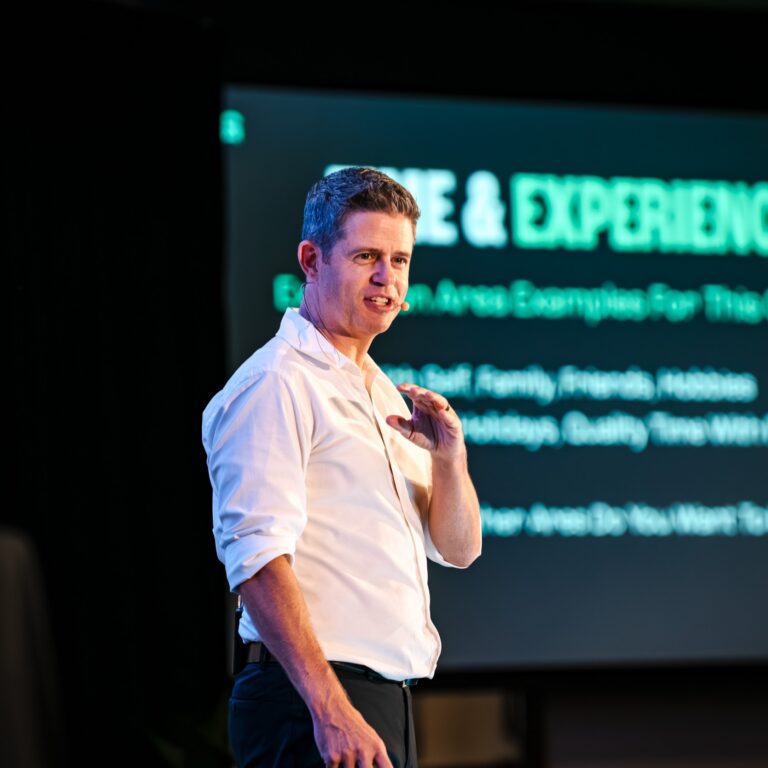
Hiring the wrong business coach can cost you more than the fee. It costs you months of misaligned advice, generic frameworks that don’t fit your business, and the opportunity to work with someone who could have actually moved the needle. If you’re running a business somewhere between $750K and $50M in revenue, the stakes on this decision are real. Below, Sean Soole shares how to find a business coach who’s worth the investment after two decades in the industry.
Prioritise Experience Over Theoretical Knowledge
There’s a growing category of business coaches who’ve built their coaching business by teaching what they’ve read, not what they’ve done. Their first real business is the coaching one.
That distinction matters. Someone who has built and scaled a real business brings pattern recognition that no textbook can replicate. They’ve made the payroll calls, the hiring mistakes, the pricing decisions, and the cash flow gambles you’re facing right now. They know what it feels like when a key hire quits in the middle of a project, or when a client three times your average size walks away.
When you’re evaluating a potential coach, look for evidence of businesses they’ve built themselves. Actual operating businesses with revenue, staff, customers, and the operational scars that come with them. Consulting engagements and advisory work are a different beast, and while useful, they don’t replace the experience of running the thing.
Check the Track Record on Both Sides
Any coach worth their fee should be able to point to two sets of results: their own and their clients’.
For their own results, look for verifiable business outcomes. What did they build? What did that business look like at its peak? What did they do with it? A coach who cannot articulate their own story of building something is unlikely to help you articulate yours.
For client results, Google reviews and testimonials are your friend, provided you read them properly. Look for specifics. A testimonial that talks about revenue growth, systems built, a team hired, or a specific commercial outcome achieved carries more weight than a generic “changed my life” quote. If a coach has been operating for years and cannot show you a body of client success stories with detail, that’s information in itself.
Question the Scale of the Group Before You Join
One of the shifts Sean has observed over 20-plus years in the industry is the push toward larger coaching groups. The rooms get bigger, the speakers get more expensive, the promises get bolder.
The problem is straightforward. Content delivered at scale is just content. It becomes useful only when someone helps you apply it to the context of your business, your team, your market, and your numbers. In a room of 500 people, that context is impossible.
Before joining any coaching group, ask how the model actually works. How many members? How often do you interact with the coach directly? Is the value delivered through pre-recorded content and mass webinars, or through direct application to your specific business? Content without context is a podcast. If that’s what you’re after, they’re free.
Ask If You Can Actually Speak to the Person You’re Hiring
This is one of the most overlooked questions in the entire process. Many coaching businesses are structured so that once you sign, you’re passed to a team of junior coaches, associates, or account managers. The founder whose story convinced you to sign is now the person you see on stage twice a year.
There’s nothing inherently wrong with a team-based delivery model, but you should know what you’re buying before you buy it. If part of the value in your decision is access to the person at the top, confirm that access is actually available. Ask directly: How often will I speak with you? What’s the mechanism? Is that access written into the agreement?
Trust Your Gut on Values Alignment
The coaching industry has its share of operators who are excellent at selling and average at delivering. You can usually feel the difference in a discovery conversation.
Are they asking real questions about your business, or running you through a scripted qualification process? Are they listening for whether they can genuinely help, or listening for buying signals? Do they push back when your goals sound unrealistic, or do they mirror everything you say?
Values alignment is not a soft factor. If a coach is fundamentally motivated by their revenue rather than your outcome, that shows up in every interaction that follows the sale.
Questions to Ask Before You Commit
Once you’ve done the surface-level due diligence, take these into your discovery conversation:
- What businesses have you built yourself, and what were the outcomes?
- Can you introduce me to three current or recent clients I can speak with directly?
- How often will I have direct access to you specifically, rather than your team?
- How is the program designed to help me apply frameworks to my specific business context?
- What happens if I’m not getting the outcomes we agreed on?
- What’s the size of the group, and how does that shape the coaching model?
- Why do you do this work?
The last one is telling. The answer, and the way it’s delivered, will tell you most of what you need to know about values alignment.
The Shortcut That Isn’t a Shortcut
Working with a business coach is meant to compress the timeline between where you are and where you want the business to be. That compression only happens when the coach has the experience, the model, and the alignment to actually move you forward.
Choosing badly does the opposite. It stretches the timeline, drains your capital, and often erodes the confidence you had when you started looking in the first place. Take the time on this decision. The best question you can ask yourself before signing anything is not “can they help me?” but “have they done this, and can they show me?”
Put These Questions to the Test
Sean offers a no-pressure conversation for business owners weighing up whether coaching is the right next step. Bring the questions above, ask them directly, and see how the answers land.
FAQs About Finding a Business Coach
How do I know if I actually need a business coach in the first place?
Coaching isn’t the right move for every business or every stage. It tends to earn its fee when you’ve been stuck at the same revenue for 18 months or more, when the business has grown but still runs entirely on you, when you know what needs to change but keep not doing it, or when you’re preparing for a specific transition like a sale or handover. It’s usually the wrong spend when you’re pre-revenue, when your problem is genuinely a specialist one (tax, legal, technical), or when the business is in acute financial distress.
How long should I work with a business coach?
Most business owners see the strongest outcomes over a 12 to 24 month engagement. That timeframe allows for real implementation rather than just planning. Shorter arrangements can work for a specific project or transition, but sustained progress in a business generally requires sustained accountability.
What’s the difference between a business coach and a business consultant?
A consultant is typically hired to solve a specific problem and deliver a piece of work. A business coach is hired to develop the operator, guide strategic decisions over time, and hold the owner accountable to their own goals. The distinction matters when you’re deciding which one you actually need.
Can I work with a business coach if my business is under $1 million in revenue?
Yes, though the coach you choose matters more at that stage. Look for someone with experience helping businesses cross the thresholds you’re working through, whether that’s your first key hire, your first million, or your first operational structure that runs without you sitting inside it. Sean’s Inner Circle program is built for owners already turning over $750K or more. If you’re earlier than that, the free resources in his content library are a better starting point.